
Private Miles
What my running actually looks like right now

My running right now looks boring from the outside.
A slow, deliberate recovery after I wiped the slate clean at the beginning of January. The reason? I suspect that the only way out of my knee misery is through thoughtful load management1.
Specifically: to what extent do I put strain on my knee so that, on the one hand, it is challenged and learns to take more load, but on the other hand, it does not constantly drift into irritation.
In recent months, I have learned that balanced load management is a very narrow path, and I have ultimately decided to consistently pursue this middle ground and no other.
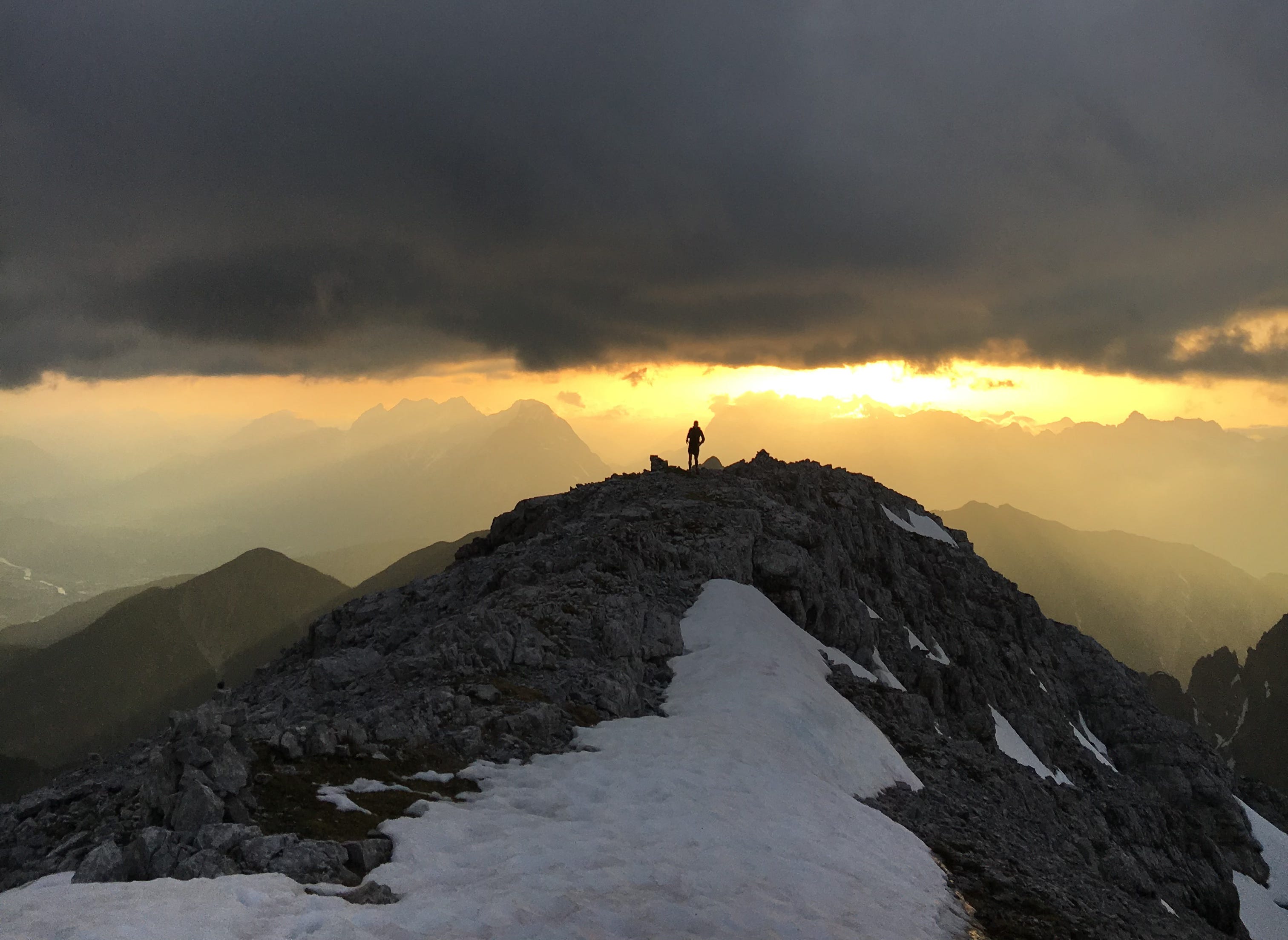
But that’s not what I want to write about today. It’s just the hook that there isn’t much to see in my running life right now. To be honest, it has never been as unspectacular as it is now. No on-point key workouts, no race announcements, no heroic “back at it” posts. Only small, stubborn steps on a long, uneventful path.
Which is exactly why I switched my Strava to private.
Not “followers only”. Not “close friends”. Fully, quietly, boringly: private.
The consequence? No kudos, no comments, no “glad to see you back out there” or “you’ll get there”.
I know most of those reactions are kind. I just don’t want them right now. I don’t want to perform how well I’m coping. I don’t want to manage anyone else’s expectations or worry about the story my training log is telling the world.
I want this chapter to be between me and my body. Me and my knee. Me and the small radius around my house. Or the gym, for that matter.
The app calls it a privacy setting. It feels more like an emotional setting.
Leaving the feed, keeping the sport
A few months ago I did something similar with Instagram.
Every time I opened the app, I left more irritated than entertained. The scroll did not make me feel connected or inspired. It made me feel thin, even aggravated at times.
So I deleted it from my phone.
It’s wild how quickly a platform disappears from your nervous system when the icon is gone. I don’t wonder what I’m missing. I don’t feel guilty for not posting. I just… live my life, and my running, without thinking about how it will look in a vertical story.
Once a week – on Fridays – I reinstall it for thirty minutes.
That’s when I post the new Das Z Letter. I upload a few slides. The Meta algorithm punishes Substack links like they’re a crime, but I still put them there. I answer a couple of messages that have accumulated there. I click through a few accounts I genuinely care about. Then I delete the app again.
As I have never been active on TikTok, LinkedIn, YouTube or any other social platform, my running life is currently almost completely invisible online.
And it turns out: I don’t miss the visibility. I miss something else.
What my running really looks like
In my head, I still like to arrange my running into clean chapters: comeback, build, breakthrough, redemption race. It’s dangerously easy to narrate a training block like a documentary with clear turning points and satisfying payoffs. On paper, this rehab could be framed the same way: disciplined work, quiet consistency, eventual return. But that’s not what my actual days look like.
My knee doesn’t care about cinematic suspense or storytelling arcs. It cares about load. About strain. About sleep. About inflammation. About what I eat and how stressed I am. About the dull reality that rehab looks like three steps forward, two and a half back, repeated until you almost forget why you started. About becoming terribly ignorant and then reasonable again.
That’s not a story the internet knows what to do with.
It’s also the most honest thing I’ve done in a long time.
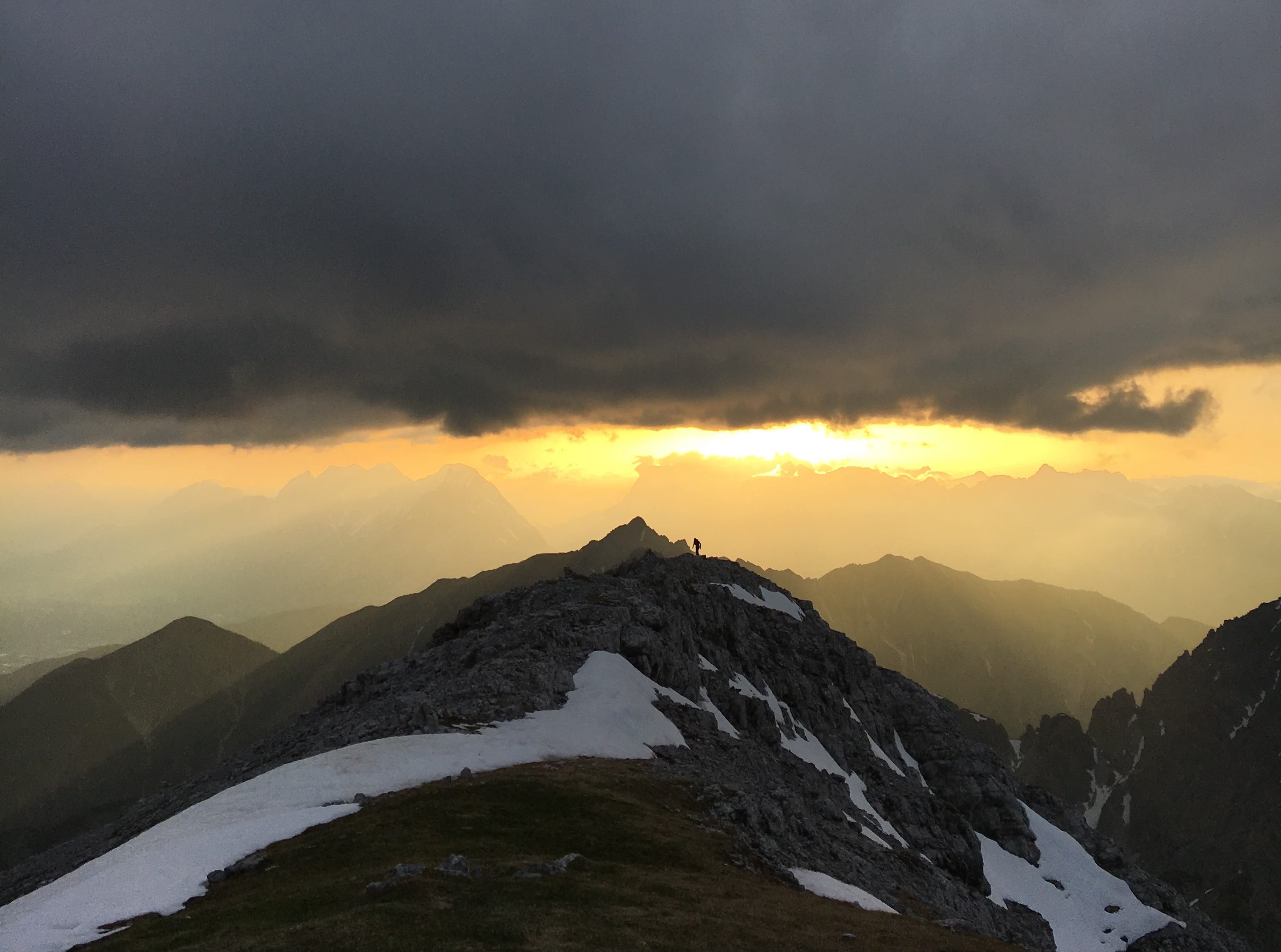
Running off the grid
So what does running without the internet look like?
It looks like something that doesn’t need an explanation. A week of run–walk intervals that only you and your physio would understand.
A Sunday long walk – not long run – that would get scrolled past instantly, but means the world to your future self.
It looks like not knowing what everyone else ran today, and letting that be a relief instead of a disadvantage.
It looks like being answerable to your body and your values, not to a feed.
And yes, it also looks a little lonely at first.
We’ve used these platforms to build real friendships. We’ve cheered each other on through the darkest of times and the greatest of highs. Pulling back from that can feel like you’re abandoning your people.
I say this because I don’t want to constantly criticize social platforms like Strava. There are a lot of good things happening on it, but right now, I just can’t get into it.
Words instead of proof
Right now, the only place I still spread my runner soul in public is here, in my Das Z Letter.
In words. On a specific topic. In a format you have to choose and spend time with. That alone already changes the energy completely.
Publishing here feels less like shouting my life into the void and more like knocking on a door. I’m not forcing my day onto you while you’re trying to escape yours. I’m asking for something rare and precious: your time and attention. You can say yes, or you can ignore it. Both are allowed.
Sometimes my Das Z Letters are read by many people. Sometimes by very few. Either way, the act of writing is never wasted. It helps me make sense of things. It gives shape to feelings that would otherwise stay stuck somewhere between my knee and my chest.
Running is the same.
My run is already complete the moment I stop the watch, not when some feed lights up in approval. The effort and soul connection are real, even if they never appear as numbers on a screen.
Then that’s the point of this strange offline chapter: to remember that writing and running are allowed to be their own reward. Even if no one likes them. Even if no one sees.
Everything Not Running
This week I watched the founder of running brand Satisfy have a strange, remarkably embarrassing public outburst at a competitor, and it pushed an old question2 back to the front of my mind: where does influence end and “rip-off” begin?
Fashion, music, art, etc. – they’ve always eaten from the same table. Ideas bleed into each other, get recycled, distorted, reinvented, elevated. At what point is something a theft, and at what point is it simply lineage? If you are genuinely ahead of the curve, shouldn’t it be an honor when others start to move in your direction?
The irony, of course, is that Satisfy has built a big part of its visual language by pulling from other places too – very often from punk and hardcore aesthetics that were born in scenes where overpriced runway fashion would have been laughed out of the venue. Or how Michael B. Dougherty put it:
It doesn’t seem to me that they are under any existential economic threat either. Business-wise Satisfy seems to be doing more than fine: reports put their recent annual revenue at around €11 million, with fresh funding on top to chase even bigger numbers3.
Maybe that’s what this tantrum really signals: not some great moral line being crossed, but a brand realizing it no longer fully owns the conversation it started. Every brand story hits a point where it stops feeling like a prophecy and starts feeling like a reference. When that happens, you can either welcome the next wave in, or stand on the shore shouting at it.
On Repeat
By today’s standards, Absidia’s studio recordings would likely be dismissed as amateurish demos, as they are filled with playing errors and lack of tightness. However, the almost supernatural power of their early 2000s metalcore anthems leaves no doubt about the band’s unbound talent in songwriting and performance. And I’m not just saying that because some good friends of mine played in the band.
Even after more than 20 years, Absidia makes me wonder if the volume can go louder than “10 out of 10.”
The song “Reversal of a Broken Hearted” is from their legendary split with Six Reasons to Kill. Incidentally, it’s also one of my top ten album artworks of all time.
Would make up a nice topic for another article
This question has been debated back and forth in the music scene where I come from for decades.
I decided from the start to keep both Garmin and Strava accounts private.
I don't like the comparison and competition coming from that. Even when I have to do without some Likes or Kudos now and there (mostly not).
Planned to cancel Strava for a long time already, maybe now's the time. rm-ed it from my phone, might look into it on the laptop, won't do often, I assume.
Basically what I want from my watch etc is keeping track of my activities.
And even this number-driven approach doesn't fit my current situation: it's rehab, not self-optimization.
Isn't it that we want to hear/read that we do OK ... reading "you have improved", "you are top 10%" etc. ?
Shouldn't we tell that ourselves? Knowing about all the parameters better than any watch or platform: the stress you had at work, the sick cat ( ;-) ), the bad sleep, the pain, the anxiety ... every Garmin user knows about the label "unproductive", while you are really doing what has to be done.
In your context, in your body, in your life.
Hi Chris. Thank you for writing this and other essays about your less-than-glamorous journey with running and knee injury. I remember coming across your post from January, and re-read it again today. It's interesting to juxtapose how I felt about it then, and how I feel about it now that I'm facing my own existential running crisis.
My Strava account went from 15-hour weeks to nada. I put one upper-body gym workout on there this week just to keep my 466-week streak going, which only exists because I've been on Strava for a ridiculously long time (since 2010, although I used to skip full months of tracking workouts when I felt tired of feeling 'judged' by the Internet. That mostly went away when I acknowledged that no one legitimately cares about my numbers, and I like having a record of my data.)
Being on crutches for only a week has already given me sharp insight into what a gift it is simply to be able-bodied. For now, I am unconcerned about whether I'll be able to run as I once had, and more concerned about my long-term outlook for walking and hiking. That's how I am determined to approach my recovery — taking the longest view possible. Come what may.