
Training Like a Pro – Race Results Like a Rookie
On choosing a broad, beautifully messy running life

Every runner knows the quiet sting of a race that ignores the months of training that led there.
You have done the structured work. Weeks of planned sessions, long runs with purpose, intervals that matched the numbers you were aiming for. Volume and intensity dialed in perfectly. The training log shows steady progress. Fatigue is under control. On paper, this is what “ready” looks like.
You warm up, find your spot in the corral, watch the clock count down. No drama, no panic, just the confidence that today should reflect what you have built.
Hours later you stop your watch, look at the numbers and what you see is…. ‘OK’.
For as long as I have been running, that combination has followed me: preparation that feels almost like a pro, with very average outcomes.
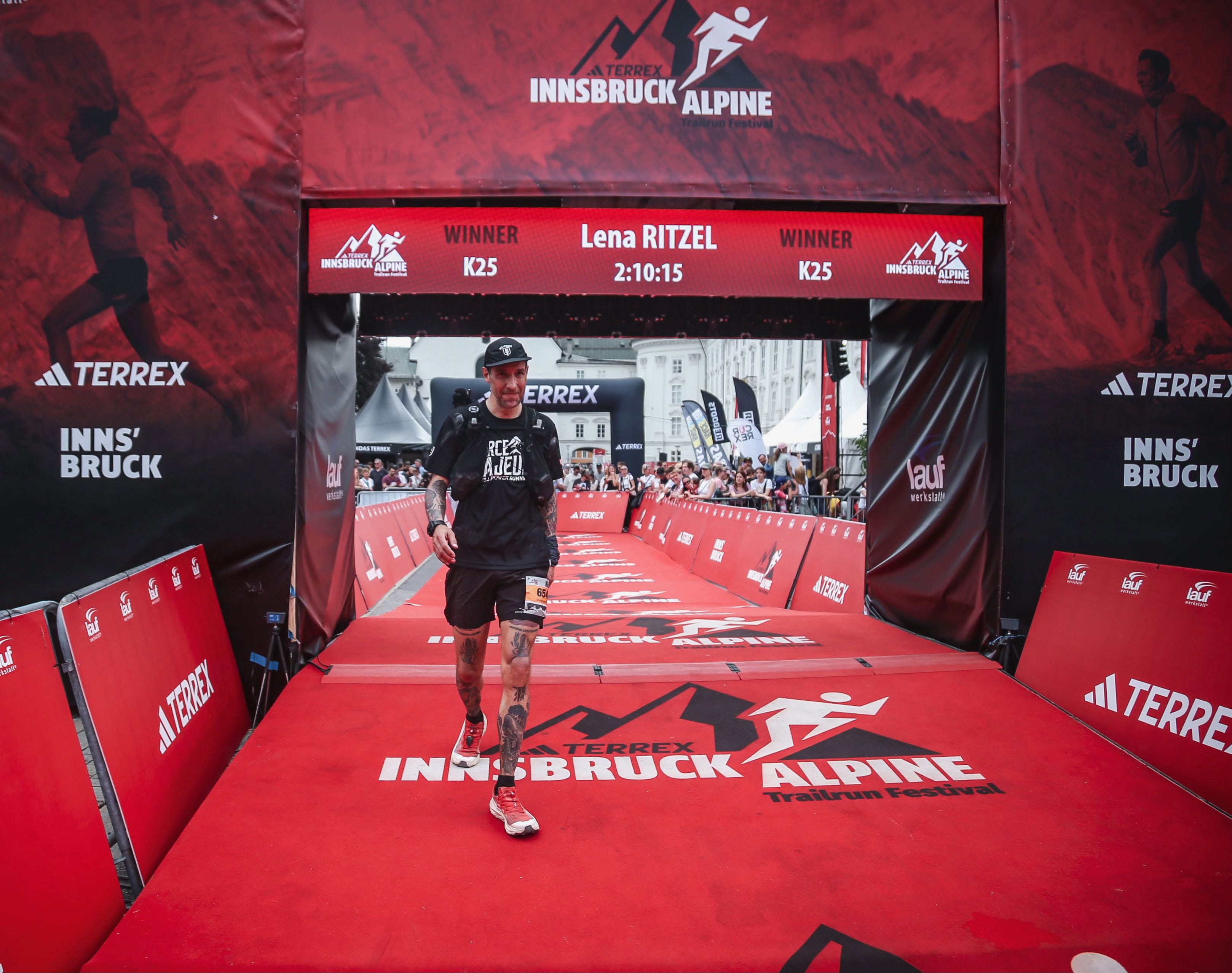
The Training World Champion
Make no mistake: Like most of us, I am a hobby runner. I live in the wide field between “beginner” and “elite”, and I am at peace with that. I even wrote an essay about it.

At the same time, the way I have approached many race preparations would not look out of place on an (at least “semi-”) professional training plan.
Especially during my marathon years from 2017 to 2020, chasing a new PB that always seemed one step away. Weekly mileage, intensity distribution, progressive long runs, speed work that mattered. I treated all of it with care and curiosity. Most of the build-ups were not perfect, but all of them were serious.
In training, the curve usually rose exactly as the books describe. Threshold sessions became smoother, long runs less exhausting, recovery days truly easy, race pace efforts less threatening. When I approached key marathons, every indicator suggested that the result should finally line up with the work.
It rarely did.
The same pattern showed up at shorter road races, track races, and on trails. The preparation phase behaved as expected. The race day outcome hovered around “fine”.
When I did have exceptional days, they often arrived in phases where they didn’t belong. My long-awaited sub-3 in Rodgau happened while I still thought of that race as part of the process instead of the goal. A long run with a bib number. Other strong performances came out of training blocks that were uneven, improvised or cut short. Usually B-, C- or unclassified races.
After a while you stop blaming bad luck and start looking for a deeper explanation.
Searching for the Missing Piece
The first place most of us look is the training itself.
The Body
Physiology offers many potential gaps: missing stimulus, wrong intensity, uneven balance between easy and hard days, taper length, strength work, fueling. For a long time I assumed the answer must be hiding in one of those areas.
Out of curiosity, I have experimented with a lot of them. Higher volume, lower volume. More intervals, fewer intervals, other intervals. Conservative tapers, aggressive tapers, almost no taper at all. In 2023 and 2024 I treated the topic of tapering almost like a science experiment and reflected on it in detail.

The pattern remained: in the training phase, the numbers moved in the right direction. On race day, the return on investment just didn’t happen.
The Brain
Naturally the search shifts to the psychological side next.
Perhaps the problem is race anxiety. A hidden mental block. A tendency to tighten up and stress when it matters. It is an easy theory to reach for: you are strong in practice, something collapses in competition.
I spend a lot of time on the mental aspects of running. Also because my coach Karim Ramadan has particular expertise in this field. This wasn’t a rescue mission, I find this topic genuinely interesting. Fear, identity, self-worth, dependency on the sport, all of that and more has been on the table.
And yes, I do feel nerves before a race. But I do not feel paralyzed by them or at their mercy. On the start line I usually sense a mixture of respect and curiosity, rather than panic. During the race I make mistakes, but I do not have the impression that my mind systematically undermines my body.
The Effort
That leaves a more uncomfortable question: effort.
Maybe I simply do not reach the same level of intensity that professionals reach when they decide to go all in. From the inside, I experience key races as hard, committed efforts. The last kilometers are usually very honest. Still, I cannot rule out that my maximum sustainable discomfort sits at a different level than someone else’s. As a matter of fact, I have no way to get a precise comparison. I only know that the idea I’m simply not trying hard enough, plausible as it sounds, still feels incomplete.
At some point another idea begins to form, one layer higher than training plans, mindset tools and pain tolerance.
Everywhere at Once
Or: Choosing Width Over Depth
When I zoom out and look at my running life as a whole, a clear pattern appears: I have tried almost everything.
Short road races, classic marathons, track races, technical trail events, long ultras, even longer ultras. I have lined up at iconic races that many people treat as once-in-a-lifetime projects: Boston Marathon, Western States and several others. In most of them my result has been solid and unremarkable.
But what is striking here is that my attention has moved from one objective to the next in cycles of a few months. For a period of time, a marathon time felt like the central question. Then it was long trail races. Then speed over shorter distances. Then a return to longer road efforts. Each chapter was sincere while it lasted. But at the same time, it never lasted very long.
From the outside this looks like a colorful runner’s CV. From the perspective of performance, it looks like a life that keeps redistributing its focus.
That seems suspicious to me.
When I look at professional athletes, I notice something that has nothing to do with VO₂max or lactate thresholds: Their entire structure points at a narrow set of goals.
An athlete who wants to compete at the very top of the marathon world lives inside that distance for years. A runner who dedicates themselves to 200-mile races accepts that almost everything in their life has to support that specific demand. Even ambitious amateurs who “only” want to win their age group at a local half marathon often make clear decisions: fewer other sports, fewer experiments, clear priorities.
The difference is not only how hard they work. It is how few directions they work in at the same time.
My own race history tells a different story. I have tried to experience many versions of running without ever fully surrendering to one of them.
Seen through that lens, the gap between “professional training habits” and “average results” appears less mysterious. I have been pouring serious effort into systems that are, by design, spread across too many targets.
A Crooked Running Life
This is the place where it would be easy to express regret. Especially since, as a runner, I have now reached an age where new levels of excellence are only possible to a limited extent.
To say that I wish I had committed to a single distance. That I should have chosen a clear path and built thirteen years of continuity on top of it. That a sharper focus would have produced a cleaner list of personal bests.
I do not feel that way.
Every phase in which I pointed myself toward a specific goal felt real. Each chapter gave shape to my days and rearranged my life in a way that made sense at that moment. The enthusiasm was genuine, even when the end result on the clock ended up somewhere in the middle of the field.
What I carry from those years when I look at my running biography is less the catalog of times and more a set of states:
Phases in which I felt like a marathon runner.
Phases in which I grew into the role of an ultrarunner.
Phases in which the pace of a 1000m interval suddenly mattered more than anything else.
My race archive looks like someone tried to live several running lives in the span of one. That is exactly what I wanted, even if I did not have the language for it at the time.
Living With the Trade-Off
There is a cost to this approach.
Spreading your energy across many goals tends to flatten the peak of any single one. You become very experienced, broadly competent and hard to impress, while your results rarely stand out on paper.
The mistake is not choosing that kind of life. The mistake is expecting it to produce the same outcomes as a life that points almost everything at one narrow objective.
If you recognize yourself in the phrase “training like a pro, race results like a rookie”, it might be worth asking a different question than the usual “What am I doing wrong in training?”
For example: “What am I actually building here?”
Do I want a sharp, focused performance career with a few clear highlights?
Or do I want a wide, slightly chaotic archive of experiences that reflect many different versions of myself as a runner?
Both answers are legitimate. The tension starts when the calendar and the lifestyle look like the second, while the expectations sound like the first.
I look at my own running with that in mind and feel surprisingly calm. The curve of my “career” will never impress anyone on paper. It does, however, tell a coherent story: someone who cared deeply, explored widely and accepted average results as an acceptable price for a broad, messy, meaningful relationship with the sport.
If there is a conclusion here, it is this:
Some finishes don’t expose a lack of effort. They reveal how many versions of yourself you’ve already given to this sport. In my case, there have been many, and I wouldn’t take a single one of them back.
Everything Not Running
It finally happened: I’ve become a gym bro.
After months of getting by with kettlebells at home, I ran into a simple problem – even the two heaviest bells in one hand weren’t enough anymore to move the needle for my core work. If I wanted to keep getting stronger, I needed more load. Which meant machines. Which meant the gym.
The last time I did serious strength work there, I was in my twenties, chasing bigger arms because I thought that was the point. In hindsight, a bit more cardio would have helped me more back then, given how out of breath I got walking up stairs, but that belongs to a different chapter.
What surprises me now is how little most machines have changed, and how much my relationship to them has. If you take the time to find a good position and increase the weight slowly, you can target specific structures with almost surgical precision. It’s much easier to focus on force and control when you’re not constantly fighting for balance or worrying about form collapsing.
The gym has opened a new door for my strength work, and I enjoy this more technical, almost nerdy approach. Six months in, I’m still not tired.
And no, there is no gym selfie.
On Repeat
Great tip from my buddy Andy V-Hitter: I PROMISED THE WORLD “A Pure Expression”.
Their mix of harsh and clean vocals feels very much like From Autumn to Ashes. Same emotional overload, same sense that every part is either building towards collapse or crawling out of it. It’s basically early-2000s post-hardcore with twenty years of hindsight, and it still hits the same nerve.
There's so much running to be enjoyed, and I think that it's fine to be changing around and trying different things out. As long as you've enjoyed the journey and the adventures that's the part that really counts
Ein toller Text in dem ich mich wiederfinde! Seit kurzem bin ich in der Physio (wegen etwas was bereits verheilt ist, dennoch gehe ich weiterhin dort hin, weil es auch ein Gym ist und ich endlich Krafttraining betreibe (auch wenn ich meine Kettlebells liebe, kann ich an diesen Geräten gezielter und mit mehr Gewicht arbeiten). Das hilft in allen belangen (evtl. werde ich auch noch ein Gym-Fan). Aber das Gym Selfie von Dir fehlt mir ;-)