
Running on Odds
How Lotteries, Scarcity, and Algorithms Shape Our Seasons

There is a race you know by heart without ever having run it.
You can trace the course in your head: the river crossing, the climb that breaks people, the exposed ridge, the final turn into town. You know the shape of the start arch, the way the crowd sounds in videos, the exact corner where finishers usually start crying. Other people’s race reports have become your map.
Your body has already done years for that start line. Entire seasons arranged so that if the day ever comes, you will be ready.
But readiness and desire are not the currency here. The currency is chance.
Tickets. Stones. Standards. Algorithms. A system that turns devotion into odds, and odds into a grueling ceremony where someone else decides whether your dream gets a date or stays theoretical for another year.
That’s the strange place many of us live in now: clear desire, blurred control. A race that gives your running direction, and at the same time leaves you completely unsure where you actually stand. Hope that grows a little every season, and the quiet fear that your name is never called.
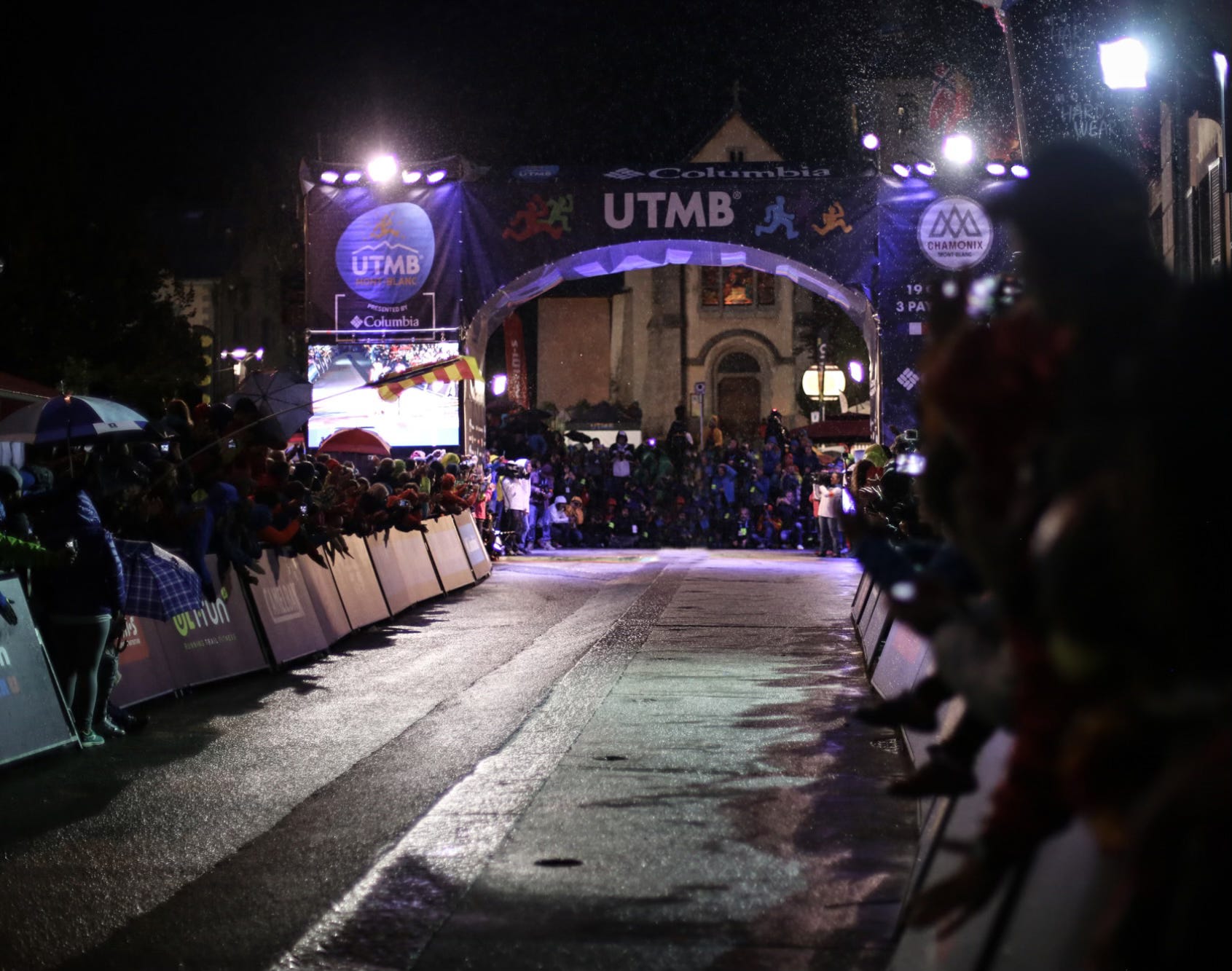
When did running become an application system?
The boom is real.
A recent London Marathon ballot drew more than 1.1 million (!) applications for a single race date in 2026. Berlin assigns its marathon and half marathon bibs by lottery as standard now. The Boston Marathon is notorious for requiring runners to beat even the tough qualifying standards by many minutes in order to participate in the race.
Western States consistently caps its field at 375 starters because of wilderness regulations, but still had thousands of qualified runners chasing 270 lottery spots. You think that’s tough? The Hardrock 100 lottery is even tougher.
UTMB built an entire “running stones” economy, where every race you enter is either a step toward the UTMB Finals in Chamonix or a step sideways. It’s obvious that the system quietly pulls people away from grassroots races and toward the UTMB-owned calendar, especially when you only have a few race slots in your life each year.
Some of this scarcity is just physics and bureaucracy: narrow trails, fragile environments, city logistics, permit limits.
Some of it is branding: limited slots create heat, prestige justifies ridiculous prices, and FOMO sells out races that might not otherwise fill.
In the heart and mind of a runner, those motives blur into one hurtful reality:
There is a thing I desperately want to do. And there are way more of “us” than there are places.
The race that calls you
Most runners I know have at least one race that feels irrationally important. To describe this phenomenon better, I have often used the phrase “being called by a race.”
Whatever race is calling you, at some point it stops being “a cool event” and becomes a character in your inner life. Part of your running personality.
You start reading race reports late at night. You meticulously study the race details and know the cutoff times at every aid station. You know which climb breaks people and where they get their second wind. You know exactly where you’d want your crew to stand.
Then you learn how the entry works: tickets, stones, qualifiers, charity bibs, performance standards, waitlists, package deals from tour operators.
Your dreams and enthusiasm are now subject to a set of strict rules and conditions.
And so your running life becomes an application process.
Hope, direction, disappointment, drift
The lottery doesn’t just decide whether you travel somewhere in June or September. It decides what your running year will feel like. How your whole running world unfolds.
If you get a go, everything snaps into place.
You have direction. The next months line up like dominos. Training suddenly has a sharp edge. You feel chosen and grateful and a bit guilty because you know a dozen people who didn’t get in and “deserved it” just as much as you.
If you are rejected, the floor drops.
You feel silly for caring this much about a random draw. You refresh your inbox anyway, as if the algorithm might change its mind. Then the numbness sets in. Not just sadness, but a strange kind of disorientation:
If I’m not training for that, what am I doing?
Do I try again next year? Double my tickets? Chase more stones? Undercut the qualifying standard even further?
Or do I walk away before this thing eats up another five years?
That’s the part we rarely talk about. Not the logistics of lotteries and the logic of algorithms, but the way they mess with our inner compass.
A dream race can give your running life a beautiful, long axis. It can also become the only North Star you recognize. If the hat never spits out your name, you stand in the dark with all your maps pointing to a place you might never reach.
You are both grateful to have something that lights you up that much and exhausted by how powerless you are to make it real.
Different ways to live with race entry uncertainty
Most of us react in one of three ways, and you can probably recognize yourself somewhere here.
1. The Hunter
You go all in. Every race you enter is a qualifier. Every season is a stepping stone. You skip small weird races and community projects because they “don’t count” and you need to train for the big ones. Your calendar becomes an Excel sheet of points, stones, tickets, standards, odds.
This can work for a while. It’s intoxicating to have one clear dream. But the risk is obvious: your actual running slowly turns into admin for a future that may never arrive.
2. The Split Screen
You keep your name in the hat, but you refuse to let the hat own you.
You still apply to Berlin, Western States, UTMB, Boston, whatever your thing is. You still feel the jolt on the draw date. But in between, you plan a local 30k trail race just because it looks fun. You join a friend’s DIY 100k project with no bibs and no branding. You help your club put on a small road race that barely breaks even.
The big race stays a dream, not a command. If you ever get the “We are pleased to inform you…” email, great. If not, you still have a running life that isn’t on pause.
3. The Let-Go
Sometimes the bravest move is to let go.
To say, out loud: I am not going to stand in this virtual waiting room every winter for the next decade. Not because the race is bad, or the people are evil, or the system is corrupt, but because you only get so many years where your body can do this, and you want those years to be full of things you can actually choose.
Letting go hurts. It feels like betraying a younger version of yourself. Like admitting defeat.
And yet there is relief in it too. Suddenly all the smaller races and strange projects and community ideas you had pushed aside are back on the table. Your running world widens again.
None of these three paths is morally superior. But only one of them keeps your self-worth away from an algorithm.
Real scarcity, real choice
The lottery system will not go away. Big races will keep using scarcity – both real and manufactured – to manage risk, grow prestige, or simply survive financially. There will always be more names than spots.
The real scarcity you live with, though, is different:
How many years your knees will let you do this.
How many weekends you can disappear into the mountains.
How many deep projects, races, routes, community things you can truly care about without burning out.
That scarcity is not artificial. It’s your life.
So the question quietly changes.
Not: How do I finally beat the odds and get into the golden race?
But: How much of my limited time do I want to peg to something I cannot control?
You’re allowed to keep your dream race on the wall. You’re allowed to feel the sharp little mix of hope and fear every time the lottery opens. You’re allowed to be devastated when it doesn’t work out and ecstatic when it does.
What you don’t have to do is hand over the whole story.
You still get to decide what counts as a real season, a real effort, a real success, a real memory. Whichever way you go, the core stays the same: the way it feels to move through the world under your own power, on a day you chose, for reasons that are yours.
No algorithm can give you that, and no rejection can take it away.
Everything Not Running
Two wonderful cats, Harry & Toto, are living with us. They are no longer young, but they still fill our lives with happiness and joy every single day. Of course, I know that this will not last forever and that they will eventually pass away, but I am very good at suppressing that thought.
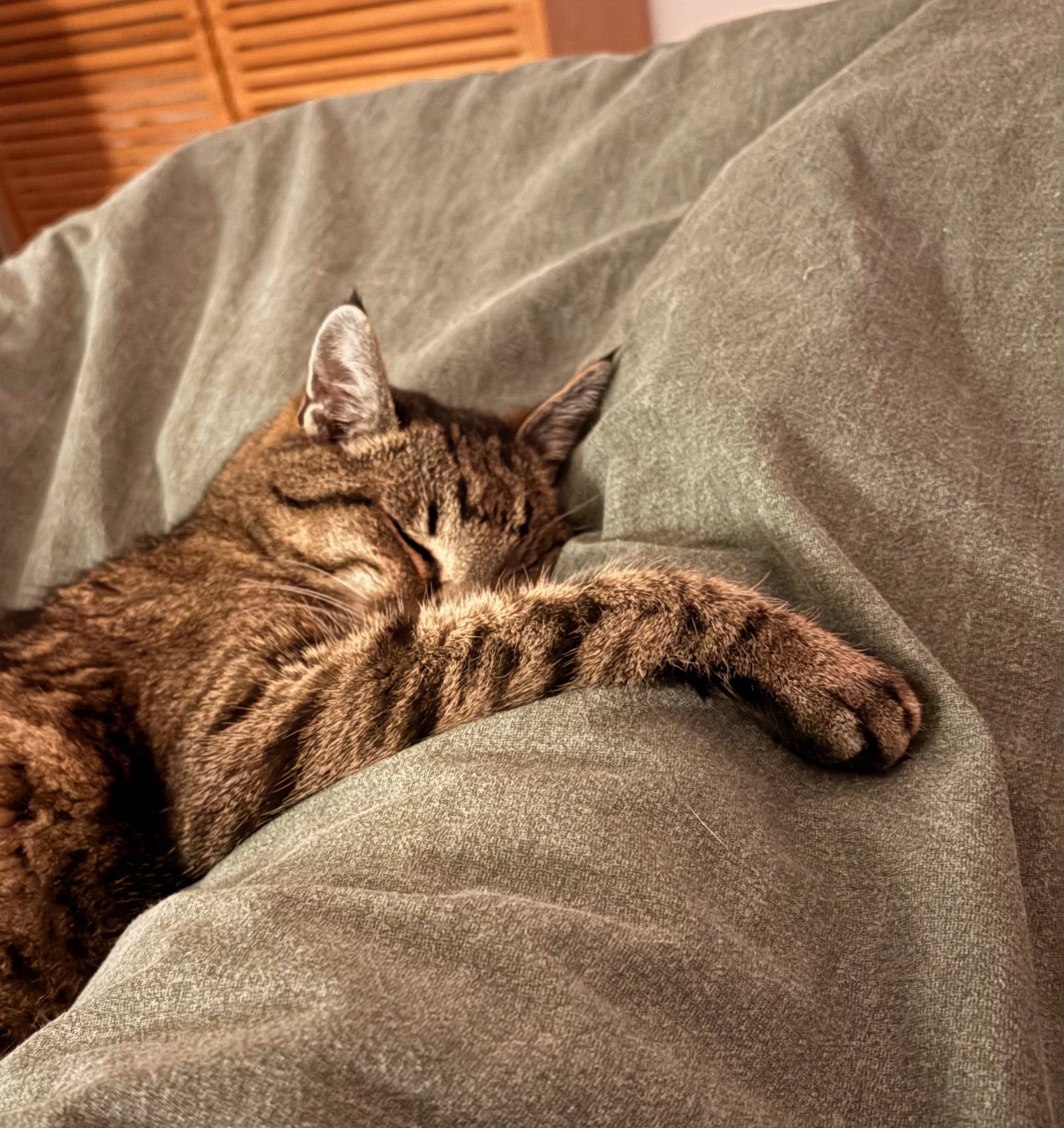
Unfortunately, there are moments when this denial tactic no longer works. Like yesterday, when we had to take Toto to the vet as an emergency. In a situation like that, you stand at the treatment table, let the doctors do their thing, and realize that at any moment they could say, “We’re sorry, there’s nothing more we can do. It’s best to keep him here. Would you like to say goodbye?”
Fortunately, that wasn’t the case with Toto. He’s not out of the woods yet, which is why I had to cancel my long-awaited Willpower meeting at the Rodgau Ultra, but he’s on the right track.
I’ve said this before: feelings are real. Always. And if we feel as connected to an animal as we normally only feel towards other people, that’s okay. All the joy, worry, enrichment, care, sadness, and affection are justified. Never let anyone tell you otherwise, or that it’s “just an animal.”
On Repeat
It’s not often that a real rock star comments on political events. It’s even rarer for someone like that to write a song that addresses the issue in clear and blunt language. But recording and releasing that song within only a few days is something that hardly ever happens.
Bruce Springsteen did just that with “Streets of Minneapolis.” And he didn’t do it to put himself in the spotlight or polish up his already flawless image as one of the coolest people on the planet. He did it to lend his support to a protest that is not only justified, but indispensable.
Thank you so much, Bruce.
This is brilliant thinking on how lottery systems shift the psycological locus of control away from runners. The "Split Screen" approach feels right but it's tough in practice when a race legitimately becomes part of identity. I experienced something similar tryingfor a permit-limited wilderness route where the rejection almost made me forget about thelocal trails that gave me more joy anyway.
There are sooooo many great races out there. Too many to spend a lot of time fussing over complex entry schemes.