

Last year, I made a fanzine.

A real one. Printed on paper, A5, 88 pages. It happened while we were working on Burning Fight, a Willpower1 drop inspired by 90s hardcore.
At some point my friend Jean-Paul and I decided to make a fanzine for this. Which was a pretty stupid idea considering everything else that was going on at the time.
Jean-Paul aka JP has been designing for Willpower for years and is also one of the Willpower Athletes, the very close circle of friends around the brand. We’ve run together for a long time. We’re both Straight Edge. And, most relevant here, both of us made hardcore fanzines back in the 90s. His was called Value of Strength, mine was Keep the Faith.
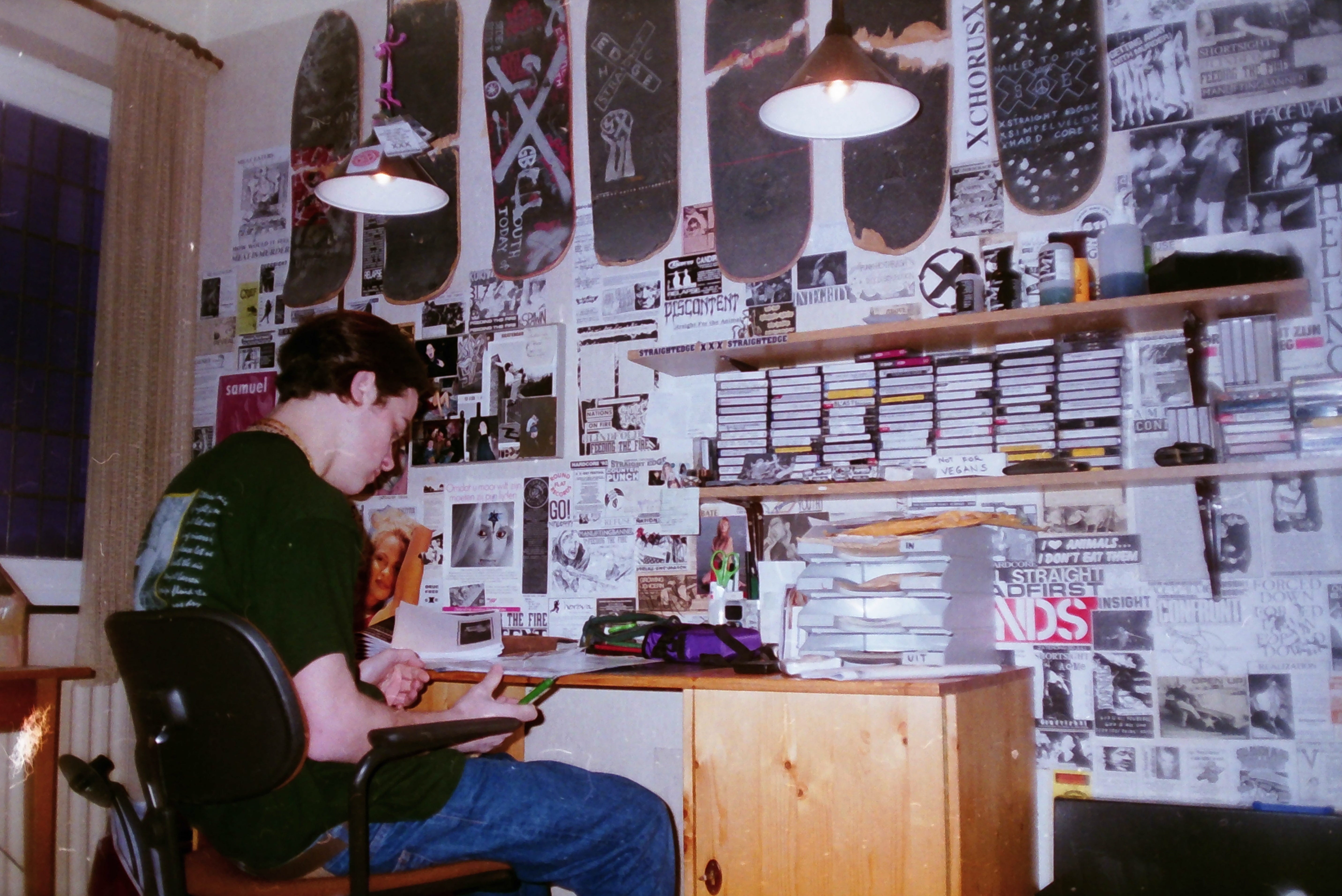
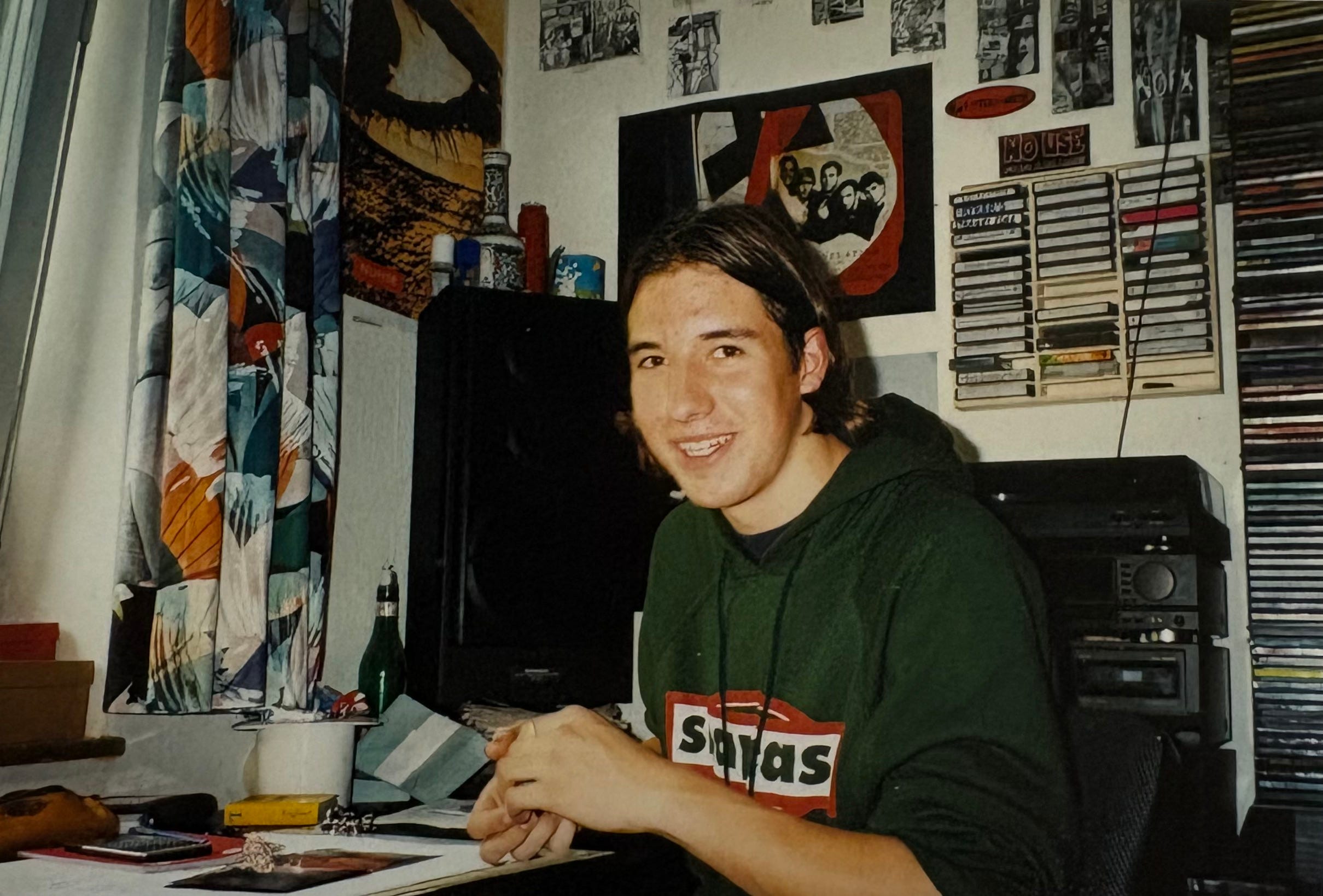
So unlike two people suddenly hopping on the analog and slow publishing trend and getting wild on punk graphics on Pinterest, we already knew what a fanzine was. A lot of work, in the first place.
What a pain in the ass it is to make a fanzine.
Somewhere between our day jobs, running and putting together an entire clothing collection, Burning Fight Fanzine grew to 88 pages. We dug through old material, including some Das Z Letters, wrote new stuff and interviewed people.
It was a very intuitive process. We didn’t discuss content plans, target audiences, editorial rules or anything remotely strategic and somehow ended up with a 100% DIY publication about hardcore, Straight Edge and running. There’s an interview with Damnation A.D. from 1998 next to one with Thrive from 2025, Bryan Poerner talking about running and hardcore, original 90s flyers and photography, and plenty of other things we simply wanted to see in there.
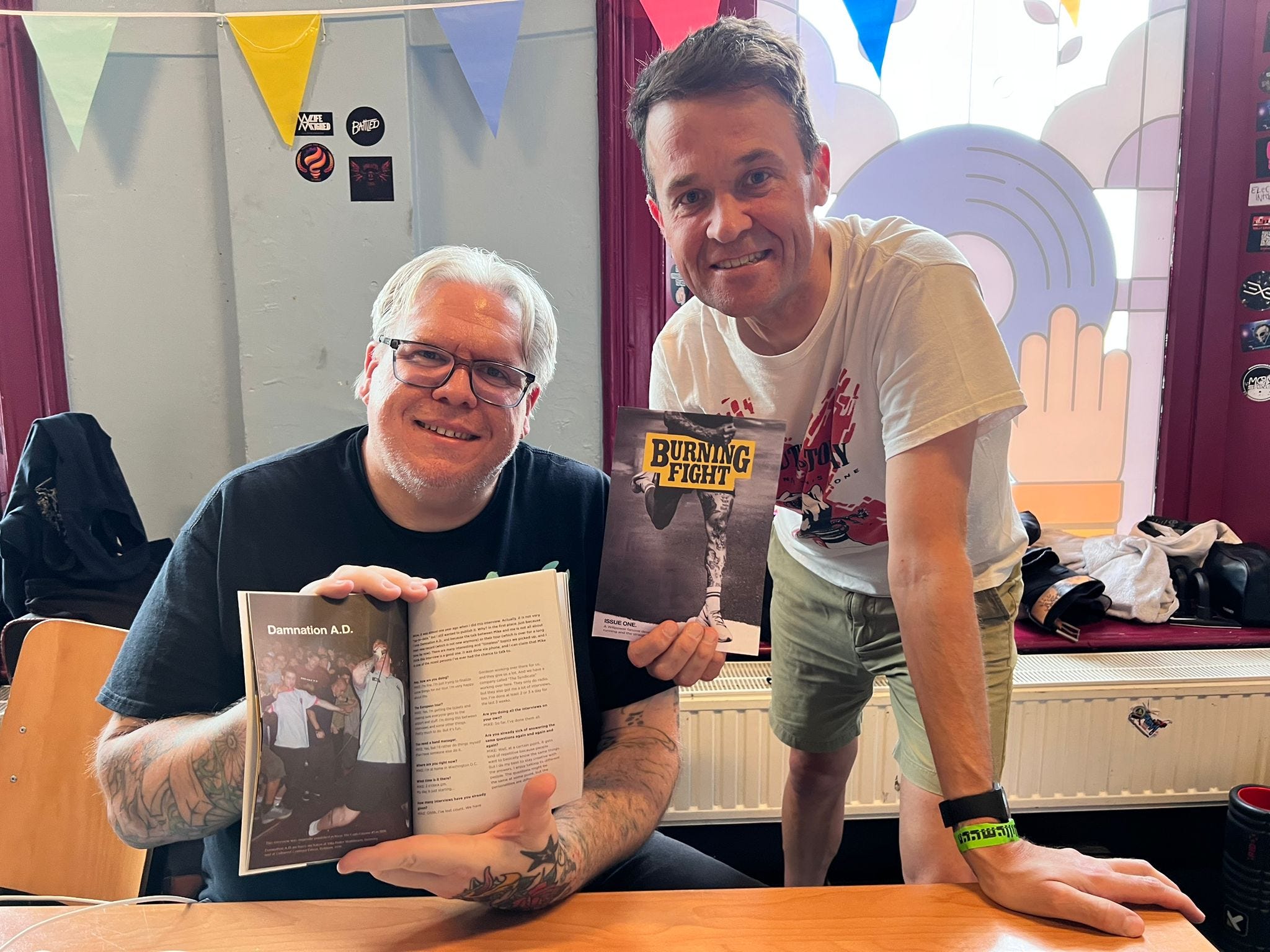
It became much bigger than what we had originally planned. Actually I’m not sure we had planned it at all.
Before Everyone Could Publish Everything
For people who didn’t grow up around punk or hardcore, or other subcultures like football, skateboarding or graffiti, a fanzine is basically a self-published magazine made by active members of a scene because no professional publication would cover the things that mattered to them.
Most looked pretty bad. Dilettantish, even. Partly because there simply wasn’t much money or access to proper equipment, partly because most of us had very little idea what we were doing in terms of publishing. But that was exactly the point.
You wrote things yourself, bothered bands for interviews, asked friends for photos, cut things out, copied stuff, moved everything around until it vaguely resembled pages and eventually took the whole mess somewhere to reproduce it. In most cases, that somewhere was your boss’s or school’s Xerox machine.
Then you had boxes of magazines in your bedroom. That was the easy part. Now people somehow needed to get them. The not-so-easy part.
You sold them at shows. Sent envelopes to people you’d never met. Traded copies with other fanzines. Gave ten to a friend who was going on tour because someone in Belgium might want one. Asked record labels and distros to take a few on commission.
The Friction
Behold: this is not going to turn into a story about how everything was better before the internet. It wasn’t.
Everything was slow. Ok, that part was better indeed. Information was hard to find, and sometimes there simply wasn’t any. Getting in touch with someone could take weeks. Half the time you weren’t even sure if a letter had arrived.
Today I can write something after my second breakfast coffee, like this Das Z Letter, and put it in front of thousands of people before I leave the house. That’s fucking great.
Still, making a fanzine again after all those years made me notice something I hadn’t thought much about before: there used to be quite a lot between having an idea and putting that idea into the world. Now there is almost nothing.
And I’m increasingly unsure whether removing all that friction, all the waiting, pondering and reworking, has only been a good thing. Some things might need a third coffee. Or another day. Two days. Or someone telling you it’s crap.
Borrowing From Our Own Past
There was another thing going on with Burning Fight. 90s subculture looks very good right now. You’ll find its visual language all over fashion, streetwear and increasingly running: varsity lettering, old athletic graphics, tattoo imagery, badly reproduced photographs, Xerox textures, oversized shirts (we only had one size in the 90s and that was XL) and plenty of designs that look like band merch from 1996.
Willpower does this too. We’ve made several drops and collections over the years that very openly reference the hardcore culture we came from.


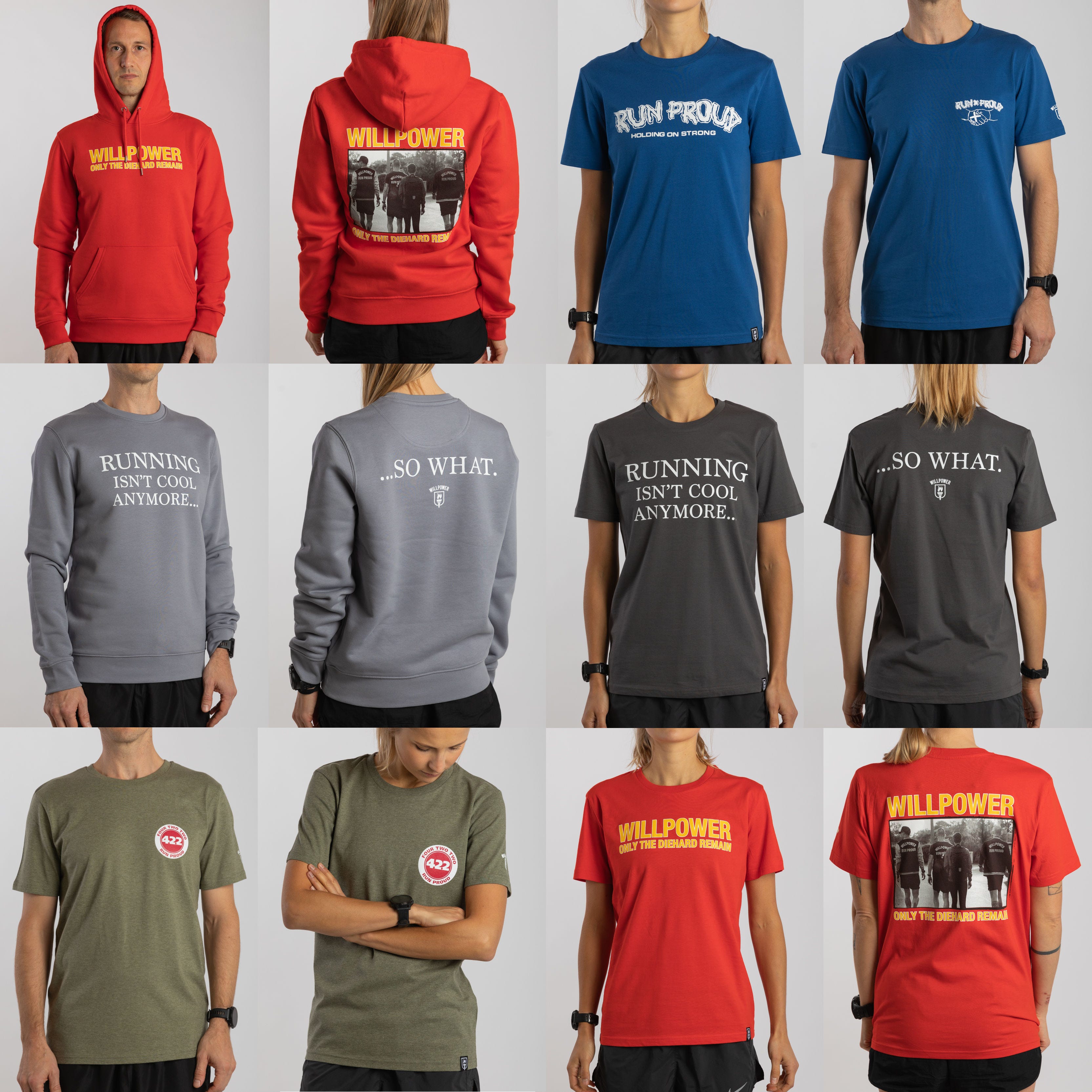
And yes, I think we do it well. I’m confident saying that because we approach these things with a lot of respect and usually obsess over references that almost nobody buying the shirt will ever notice. More importantly, this wasn’t a culture we discovered later because the graphics looked cool. We were there.
JP and I both made fanzines, played in bands for decades, ran or worked at record labels, toured our asses off, put on shows and lived inside that world. A lot of the people around Willpower come from the same place. It shaped how we think, how we work and, very obviously, how Willpower looks.
But that doesn’t mean hardcore belongs to us. It means we should know what the fuck we’re doing when we borrow from it.
No One Asked For This
One thing is clear: nobody needed Burning Fight. That’s perhaps my favorite thing about it.
There was no business case for making an 88-page magazine. Printing it cost money. It added a stupid amount of work to a collection that already involved enough work. We could probably have reached considerably more people with five Instagram reels showing old hardcore shirts.
We just wanted it to exist. Nothing more, nothing less. I like that reason. It sounds almost embarrassingly simple now, but quite a lot of things we make these days seem to require another reason.
What will it achieve?
Who is the audience?
Can it grow?
Will people engage with it?
Does it sell something?
Burning Fight is terrible at all of this. It’s a printed magazine. You have to order it. Someone has to put it into an envelope. Eventually it sits somewhere on a shelf, or in a bathroom. There is no notification when a new person reads page 47. I have no idea if anyone reads every page anyway. Some probably don’t, and that’s fine too.
Every once in a while someone sends me a picture of the fanzine on their table or tells me about something they found in it. Sometimes it’s a person who remembers the same bands and shows we do. Sometimes it’s someone much younger who has basically no connection to that world and stumbled into it through running.
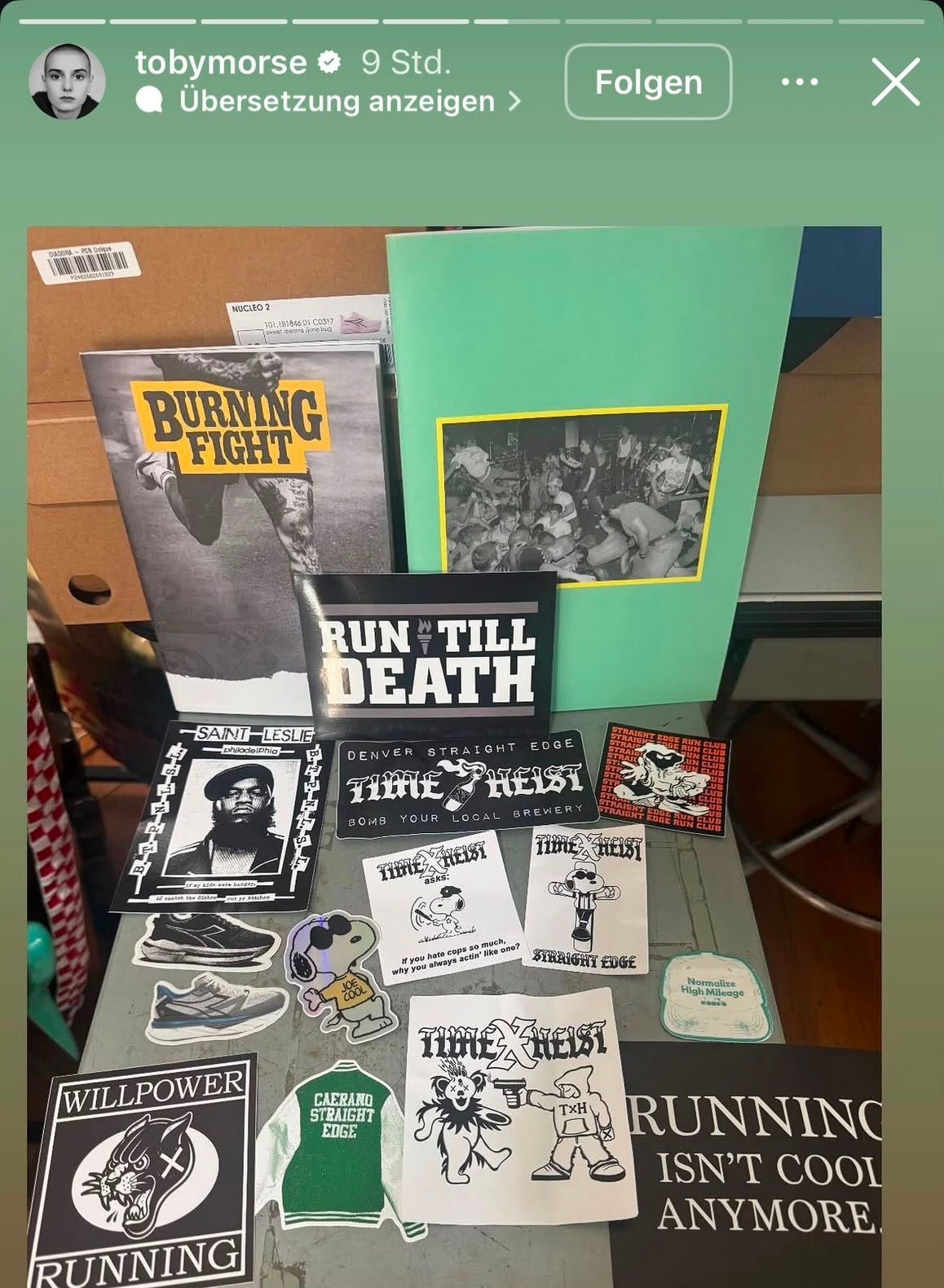
Because I don’t think Burning Fight is actually about remembering the 90s. The 90s are over. Thank god for certain parts of that. What interests me much more is what survived from it.
JP and I are obviously very different people now. It would be worrying if we weren’t. Thirty years have passed since Value of Strength and Keep the Faith.
We run now. We have jobs. Willpower exists. Our lives got considerably bigger and more complicated. And yet, give us an idea we care about and obviously we’re still capable of spending a completely unreasonable amount of time making some little thing from the heart that nobody asked for.
I find that reassuring.
Issue Two
One last detail. The cover says Issue One. We put that there on purpose. You guessed it: there will be an Issue Two.
When? No idea.
Seriously. We haven’t scheduled it. There is no publishing rhythm, and right now I couldn’t even tell you what’s going to be in it.
JP and I agreed on one thing: we’ll start when we feel like making another one. It will contain whatever we want it to contain and it will probably take far too long again.
Good.
I don’t want Burning Fight to become a content format. I want to make another quirky fanzine with no plan and no reason beyond wanting it to exist.
Everything Not Running
A small side quest I’ve been pursuing lately: I’m trying to get the little checkmark next to my name here on Substack. It doesn’t make the writing better and it certainly won’t change my life, but the platform wants a certain number of dedicated paid readers before it hands one out. Fair enough.

So, for a limited time, I’ve dropped the annual paid subscription from €36 to €9.72 a year. That price stays yours for as long as you remain subscribed. You will get full access to all my [+] letters and some other perks. Among them is a copy of Burning Fight Issue One for annual subscribers, which feels like a masterpiece of marketing after everything you just read above.
If you’ve been reading Das Z Letter for a while and wanted to support it anyway, this is a particularly good moment. And yes, I really do want that stupid little checkmark.
I love you all.
On Repeat
Aligned with today’s Das Z Letter, my music recommendation is about as Straight Edge as hardcore can possibly get. Those Who Were is classic mid-90s chugga-chugga: heavy, pissed off, completely unsubtle and very much committed to its cause.
Excessive Force somehow stayed more under the radar than a lot of their contemporaries, despite In Your Blood being one hell of a record. Thirty years later they’re even giving it another shot: the band played its first show since 1996 at FYA Fest earlier this year.
Sometimes it’s rather embarrassing when bands resurface after such a long time. In this case it hits exactly where it should.
Still Straight Edge.
ME, CHRIS
I WROTE A BOOK
Runhundred — Heart Versus Heat at Western States 100
USA — Bookshop.org US · Amazon US
UK — Amazon UK · Bookshop.org UK
Germany — Amazon DE · Hugendubel
Hundert-Meilen-Herz
Germany — Amazon DE · Thalia · Hugendubel
IF YOU LIKED THE BOOK
Review Runhundred on Goodreads
Review Hundert-Meilen-Herz on Goodreads
MORE DAS Z
Archive · About · [+] Extras
To all my American readers: We are working on bringing back US shipping. Sign up for the Willpower newsletter to hear about it first.
I met JP in Amsterdam last year. I posted a photo on IG where he happened to be in the background. Mikey Kratzer saw it and said ‘find that guy and talk to him!’ Glad I did.
Congratulations on the zine! Is it true you can't ship to the US?